



 CN
CN

 HOME
HOMEWhy Cement Bathroom Sets Peel — The Coating Story Every Buyer Should Hear
 Sep 11,2026

 addinggreen
Over the past two years, a complaint has been circulating quietly among buyers across Europe and the United States. A cement bathroom set arrives looking perfect — matte, heavy, modern. Three months later, the paint starts to flake. First at the edges of the soap dish, then across the body of the tumbler. The set goes from premium to defective in a single season, and the buyer is left absorbing the returns. If you have sourced cement bathroom accessories recently, you may have seen this yourself. The question is not whether the paint failed. The question is why.
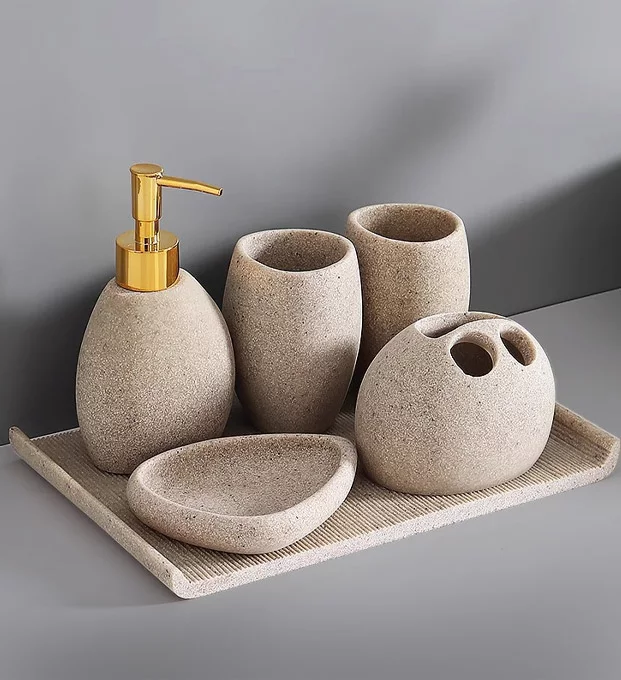
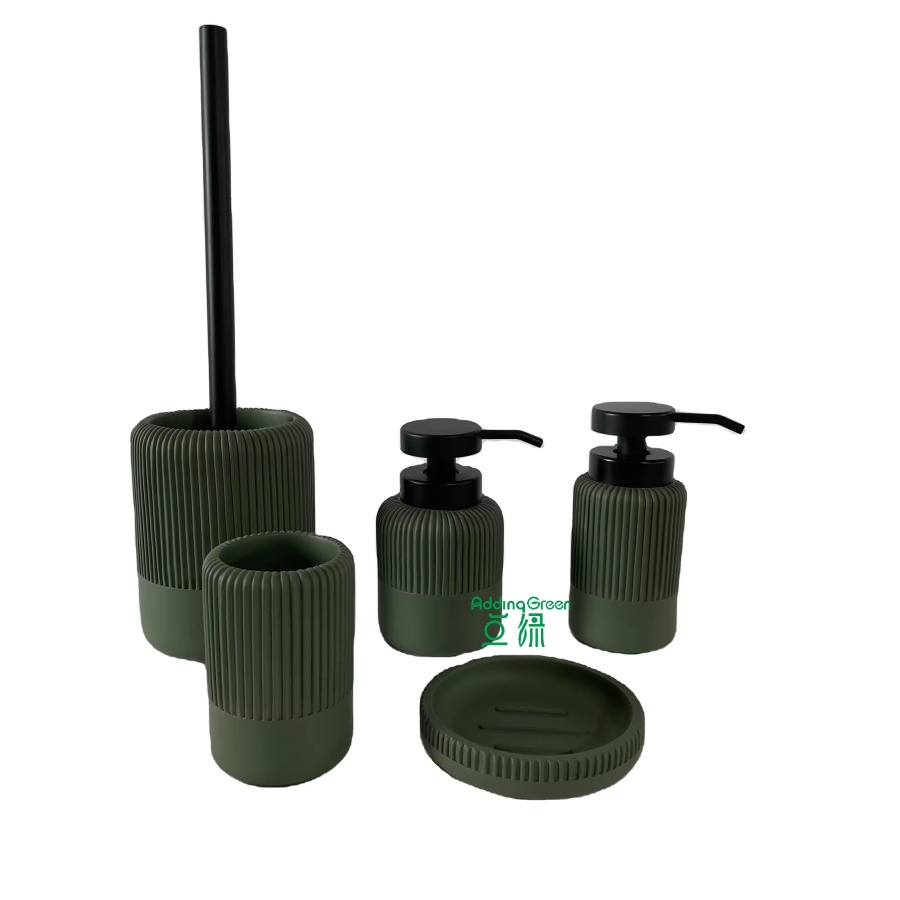
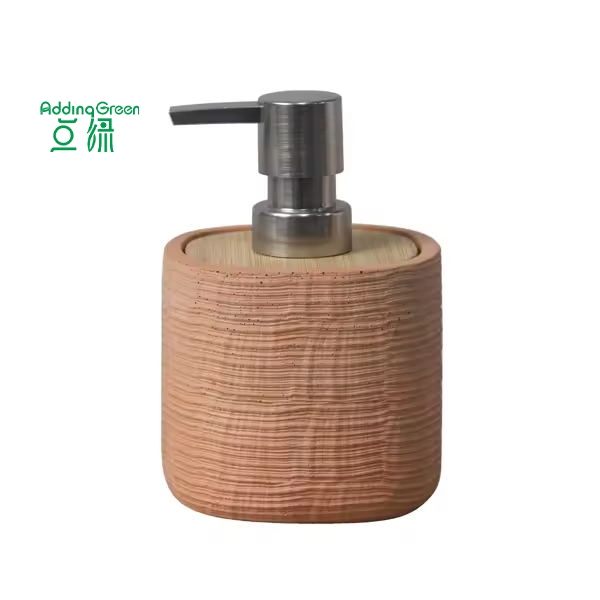
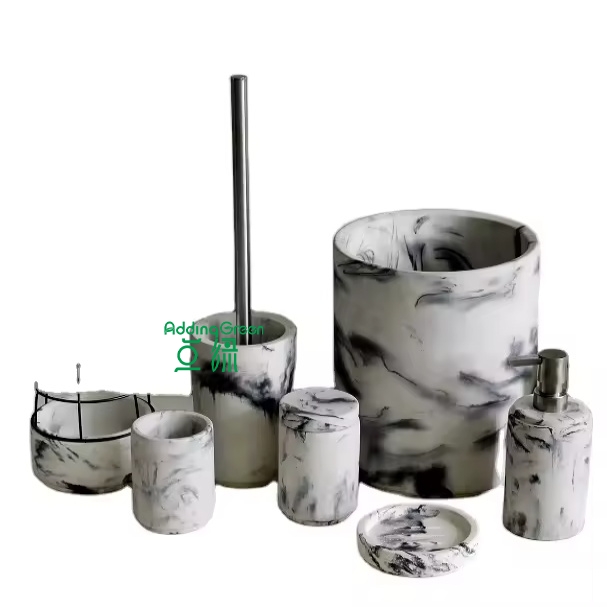
Some background helps. The cement bathroom set — lotion dispenser, toothbrush holder, tumbler, soap dish, toilet brush, tray, waste bin — is a new process. Our factory invented it in 2012 as a replacement for the traditional resin bathroom set. Before that, we had been producing resin bathroom sets since 2001, and the business was good.
But around 2010, at forty-two years old, I found myself asking a question I could not put down. Unsaturated polyester resin smells. Strongly. Everyone working around it breathes it, and our customers' bathrooms carry a trace of it too. The material is slow to weather and does not break down, which means every discarded resin set ends up as pollution. I decided we had to find a different material for the bathroom suite.
It took more than ten thousand experiments. What we found was a process built on sulfoaluminate cement — a cement chemistry that could carry the shapes, the weight, and the finish of a bathroom set without the smell, the health cost, or the environmental burden of resin. In 2012 we exhibited the first cement bathroom set at the Hong Kong Gifts & Fair. The response was immediate. Buyers crowded the booth, and the business turned hot almost overnight.
Then the market did what markets do. After 2015, our former employees began leaving to open their own factories, and the process spread. Scale grew. But cement is a hydration reaction — a living chemical process — and quality is genuinely hard to control. That difficulty attracted cement-material experts into the industry, supplying premixed powders to the follower factories. We chose a different discipline: every material we use is blended by ourselves, in-house, to our own formulation.
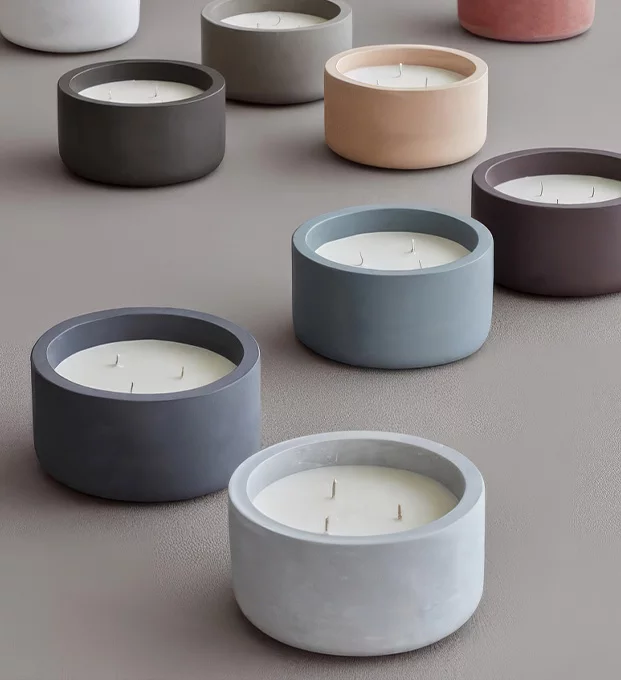
Now, the paint. Cement cures into concrete, and a concrete surface is alkaline. In real production, most buyers choose a painted surface for cement bathroom sets — color sells. So the practical question is: which paint actually holds onto an alkaline, porous concrete surface? On resin, acrylic paint works fine. On cement, acrylic peels — the alkalinity attacks the bond from beneath. The industry tried polyester paint next, and that alone still underperformed. Paint selection was never the real problem.
The key is the process. On a cement bathroom set, the surface should first receive a waterproof sealing coat — a primer that closes the pores and isolates the alkaline concrete from the topcoat. Only then comes the polyester paint. That extra sealing layer costs real money per piece. Many factories skip it to shave the price, and low-price competition did what it always does: the big volume orders flowed to the factories without the sealing process. We did not win a single one of those orders. We were the most expensive quote on the table.
Then the goods landed, and the complaints arrived with them — peeling, flaking, color lifting off in patches. Buyers who had placed large orders absorbed the damage, and many have become reluctant to order cement bathroom sets at all. A promising category is being poisoned by its cheapest producers.
Our position is simple. As a material and a process, cement is superior to resin for the bathroom suite — cleaner for workers and customers, friendlier to the environment, heavier and more substantial in the hand, and chemically stable for years. The problem was never the material. The problem was the process behind the paint. Maybe our price was high in the past. That is negotiable. What is not negotiable is the sealing layer, because that is what keeps the paint on the product.
If you are sourcing cement bathroom sets and you have been burned — or you have been avoiding the category because of the peeling complaints — talk to us at addinggreen before you decide. Ask any factory you work with how they prepare the surface before painting. The ones who cannot answer, or who say "just acrylic," are the ones whose shipments you will be replacing next season.
 Why Long Cement Bathroom Trays Warp — and How We Stop Them From Curling
 You May Also Like


 Tel
Tel
 Email
Email
 Address
No. 37, Yongguang Road, Gao'ao Group, Sanjiaotang, Baishi Village, Qiuchang Sub-district, Huiyang District, Huizhou, Guangdong Province 516226, China